How to Read a Nutrition Label Without Losing an Hour

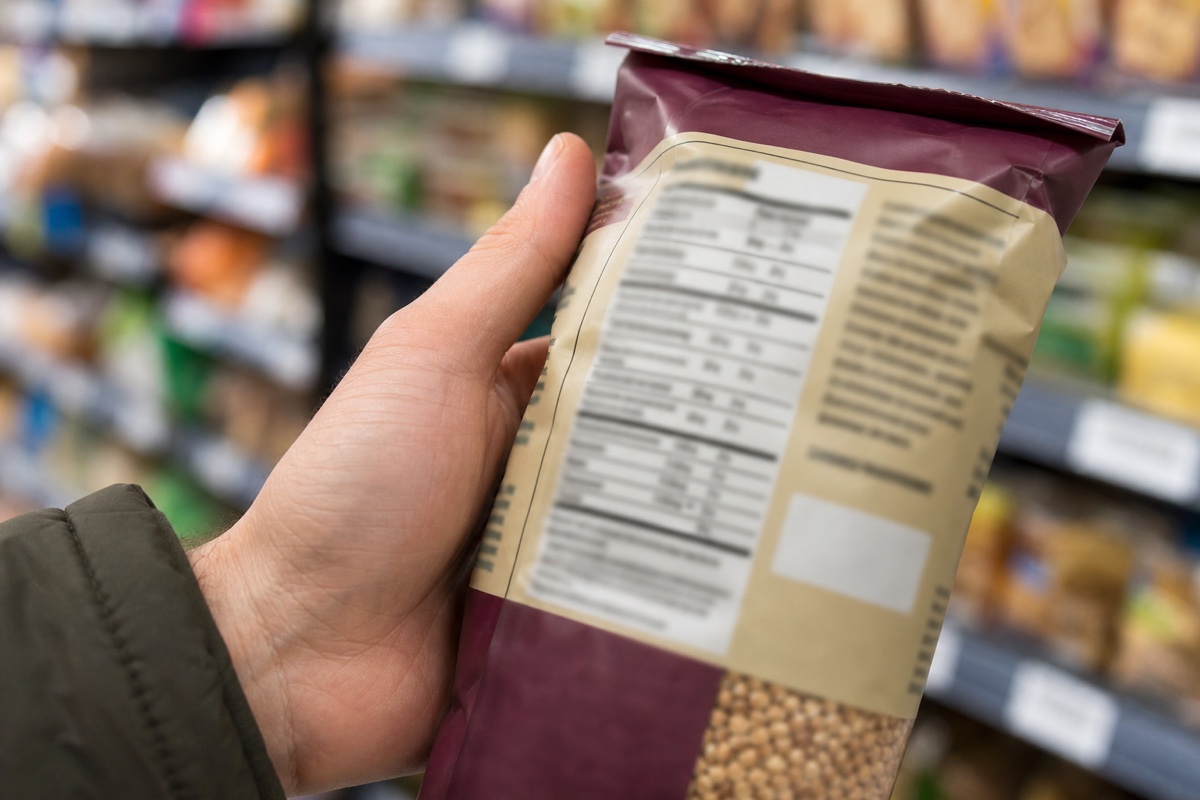
Nutrition labels are designed to be skimmed by someone standing in a supermarket aisle with a trolley in one hand, not studied like a spreadsheet. Most people either ignore them entirely or try to read every line and give up halfway through. There’s a faster middle path: four numbers, checked in order, and everything else is optional.
Start with the serving size, always
Before any of the numbers mean anything, check what they’re measured against — “per serving” or “per 100g.” Manufacturers can make a product look better by shrinking the stated serving size, so a bag of chips listing “per serving (15g)” when the bag is 175g is quietly dividing the real numbers by more than ten. Per-100g figures are the fairer comparison across products, since they’re not subject to that manipulation.
The four numbers worth checking
Protein, per 100g. This is the number most worth building a habit around, especially for anything marketed as a meal replacement, snack bar, or “healthy” packaged food. Products can carry a health-sounding front label while delivering under 5g of protein per 100g — check the panel rather than the marketing copy on the front of the pack.
Total sugar, per 100g. Not to eliminate sugar entirely, but to notice when something savoury-sounding is quietly carrying a lot of it — pasta sauces, bread, and flavoured yoghurts are common places sugar hides in products that don’t read as “sweet.”
Fibre, per 100g. Consistently the most overlooked number and, for most people eating a typical Western diet, the one most likely to be under target. Higher-fibre versions of bread, cereal, and crackers are usually a straightforward upgrade with no real downside.
Sodium, per 100g. Relevant mostly for packaged and processed foods eaten frequently — a single meal high in sodium isn’t a problem, but a pattern of high-sodium packaged foods eaten daily adds up in a way that’s easy to miss since salt doesn’t always taste as salty as the number suggests.
What you can mostly skip
The ingredient list, read for “scary words,” is mostly noise. Long chemical names aren’t inherently harmful — plenty of naturally occurring compounds have long names too — and this kind of scanning tends to flag harmless preservatives while missing the actual issue, which is usually total sugar or a tiny stated serving size. If you want to check anything in the ingredient list, check the order: ingredients are listed by weight, heaviest first, so a cereal listing sugar as the second ingredient is telling you something the front label won’t.
Percentage Daily Intake figures are calculated against a generic 8,700kJ reference diet that may not match your actual needs at all — useful as a very rough proportional guide, not a personalised target.
A worked example
Two breakfast cereals, both marketed as “wholesome”: one lists 8g protein, 4g sugar, and 9g fibre per 100g; the other lists 6g protein, 22g sugar, and 2g fibre per 100g. Both have similar front-of-pack branding and near-identical price. The four-number check takes about eight seconds and makes the better option obvious — no ingredient-list archaeology required.
Why this matters more than it sounds like it should
None of this is about finding a “perfect” packaged food — most packaged foods sit somewhere in the middle, and that’s fine. It’s about being able to make a fast, informed choice between two similar options without turning a supermarket trip into research. Four numbers, checked per 100g, gets you there in under ten seconds per product — faster than reading the ingredient list, and a better predictor of whether something’s actually useful to you.
Frequently asked questions
Should I worry about ingredients I can't pronounce?
Not on their own. Pronounceability isn't a nutrition metric — plenty of harmless compounds have long chemical names. Look at the four numbers on the panel instead of scanning the ingredient list for scary-looking words.
Is 'per serving' or 'per 100g' more useful?
Per 100g, almost always, because serving sizes on packaging vary wildly and are sometimes set unrealistically small to make the per-serving numbers look better. Per-100g figures let you compare two products on equal footing.
Related guides and recipes
Do You Really Need 25g of Protein Per Meal?
Where the '25g per meal' rule of thumb actually comes from, what it's useful for, and where it stops being a hard rule and starts being a habit.