The Five Grocery Items You Actually Need on Repeat

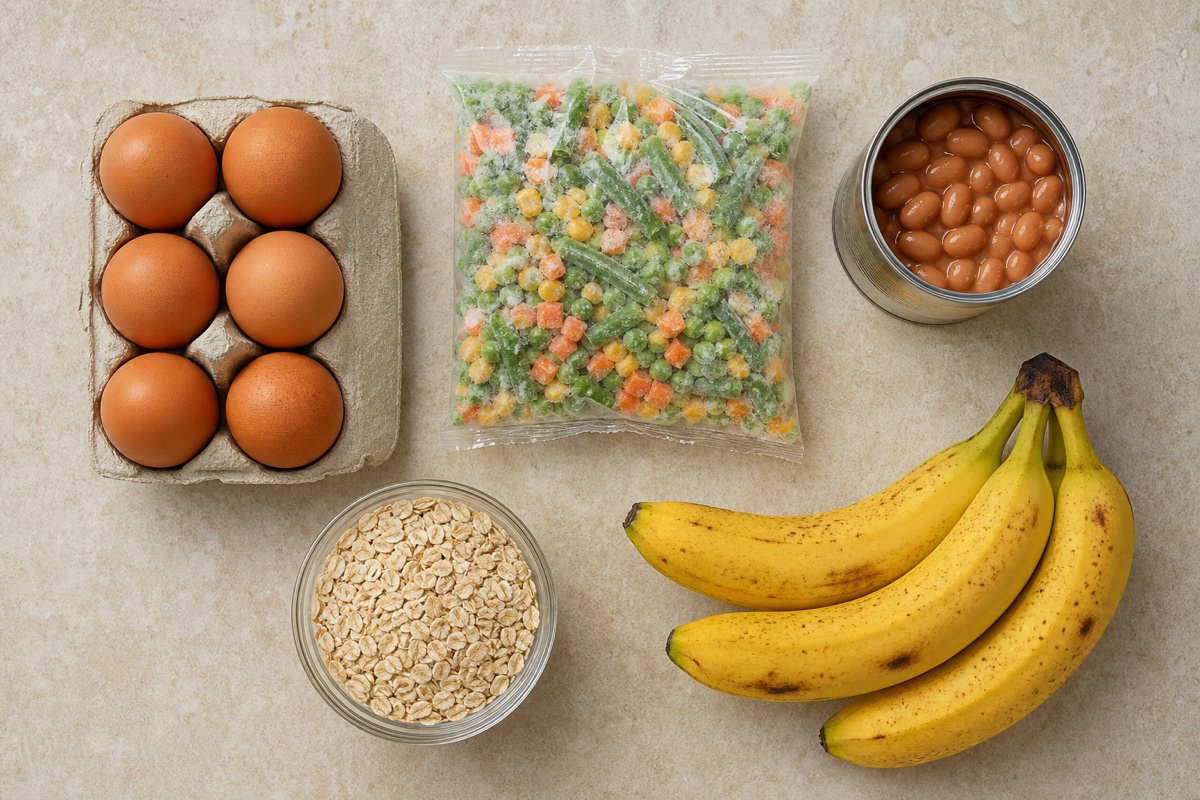
Most grocery advice tries to give you a comprehensive list, which is exactly the wrong approach for someone trying to reduce weekly decision-making, not add to it. This is the opposite: five items worth keeping stocked at all times, because between them they cover the base of most weeknight meals with almost no further thought required.
Why five, not fifty
A long “essentials” list is really just a full pantry inventory with extra steps — useful for planning a big shop, useless for the actual problem most people have, which is standing in front of an open fridge on a Tuesday with no plan. Five items is short enough to actually remember and check against before you leave the shops, and each one earns its place by showing up in a wide range of otherwise different meals.
The five
Eggs. The single most flexible protein in most kitchens — scrambled with greens for breakfast, hard-boiled and dropped into a salad, or the base of a fast dinner when nothing else has been planned. Keep a dozen in the fridge, always.
Tinned beans (cannellini, chickpea, or kidney). Protein and fibre with a shelf life measured in years, not days. They go into salads cold, soups and chillis hot, or get mashed with lemon and olive oil into something close to a dip in under five minutes.
Tinned fish (tuna or salmon). The fastest protein in the pantry, genuinely — no cooking required, ready the moment the tin opens. Buy it in olive oil where you can; the oil doubles as half a dressing.
Rice (or another shelf-stable grain). The base for almost any bowl-format meal, cooks in bulk, and reheats well across several days without much quality loss.
A bag of frozen vegetables. Frozen, not fresh, deliberately — frozen vegetables don’t wilt in the crisper drawer while you’re deciding whether to cook this week, and nutritionally they’re close to identical to fresh, since they’re usually frozen within hours of harvest.
What this list deliberately leaves out
Fresh produce, herbs, specific proteins beyond eggs and tinned fish, and anything perishable — all of that changes week to week based on what’s actually available, on sale, or in season, and trying to standardise it defeats the purpose. The five staples are the floor a meal can always stand on; what varies on top of that floor is where the actual variety and interest in a week’s meals comes from.
How this plays out in practice
A Tuesday with nothing planned and an open fridge becomes: eggs and whatever vegetable’s in the crisper, or tinned tuna and beans with a squeeze of lemon, in under ten minutes either way. Neither is exciting on its own, but neither requires a shopping trip, a recipe, or much thought — which is the actual point of a repeat-purchase list. It’s infrastructure, not inspiration.
Building from the floor up
Once the five staples are reliably stocked, the Desk Lunch Rotation and Two-Pot Week systems both layer cleanly on top — most of the recipes in either system lean on at least two or three of these five items as their base, which is exactly why keeping them stocked reduces the size of every other grocery trip that follows.
Frequently asked questions
Doesn't a short list get boring fast?
The five staples are a floor, not the whole meal — seasoning, sauces, and whatever fresh produce is around change every week and do most of the work of making the same base ingredients taste different.
Related guides and recipes
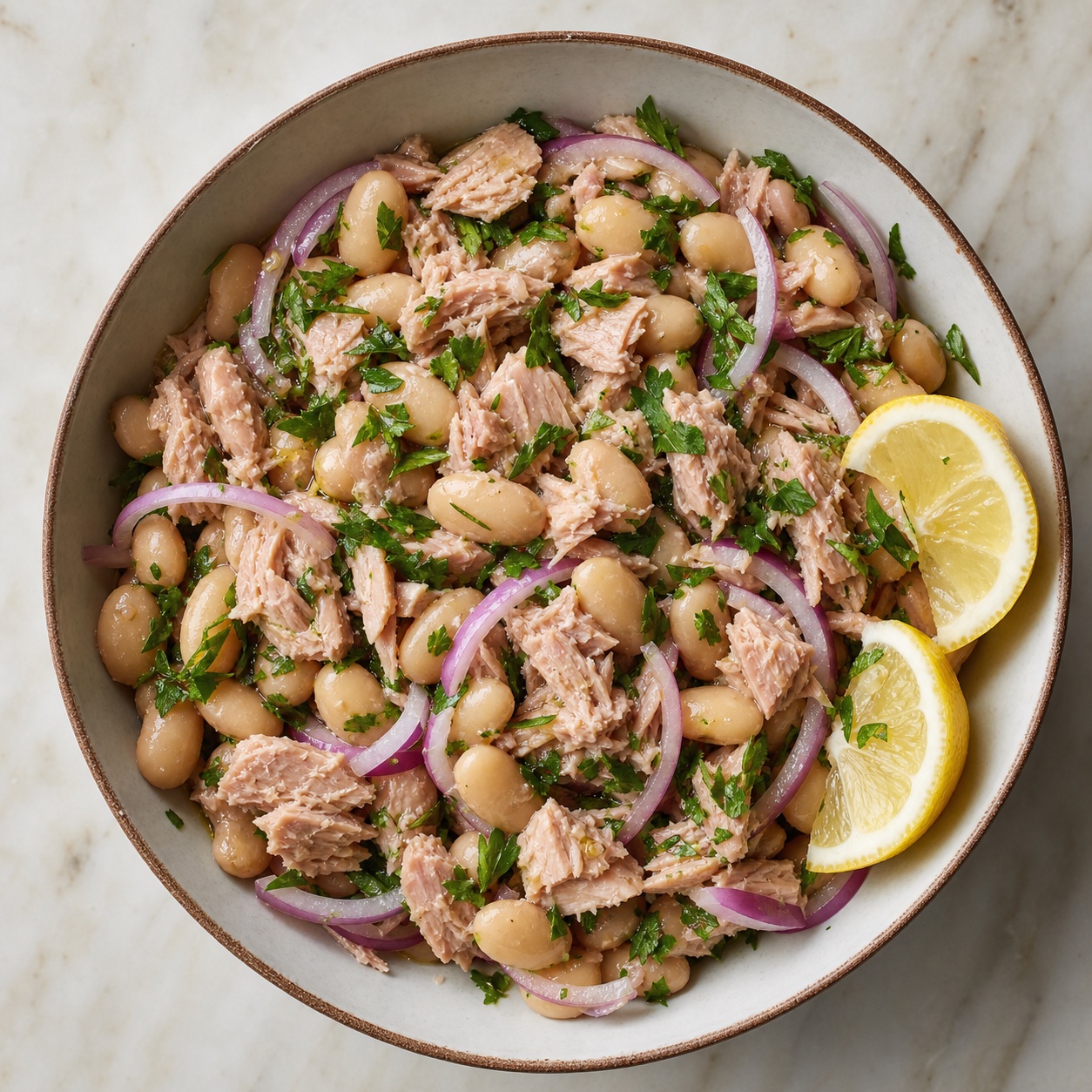
No-Cook Tuna and White Bean Salad
Canned tuna, white beans, and a sharp lemon-caper dressing — ten minutes, zero heat, and it packs well for tomorrow's desk lunch.
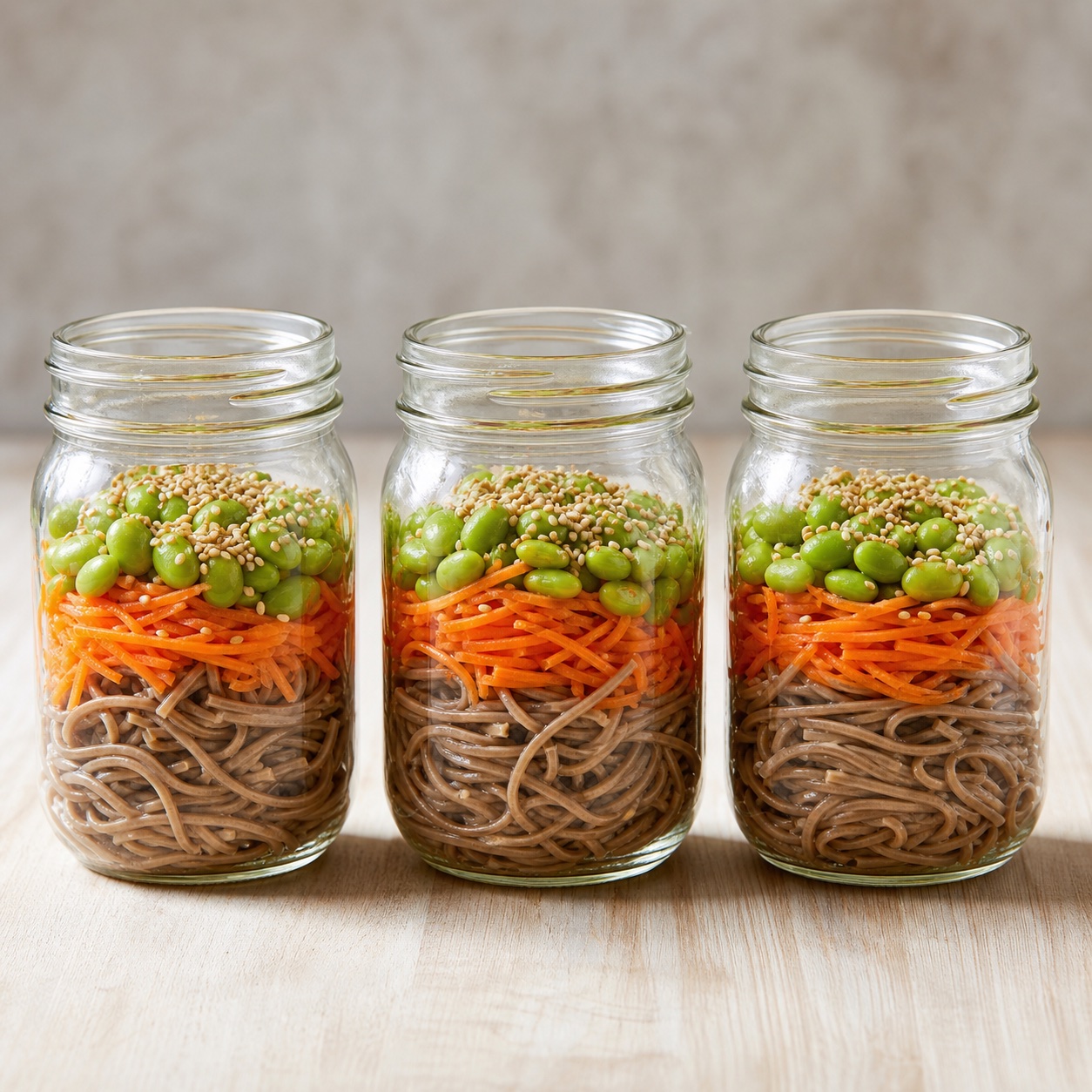
Soba Noodle Desk-Lunch Jars
Cold soba noodles, edamame, and a sesame-soy dressing layered in a jar so the noodles don't turn to paste by lunchtime.
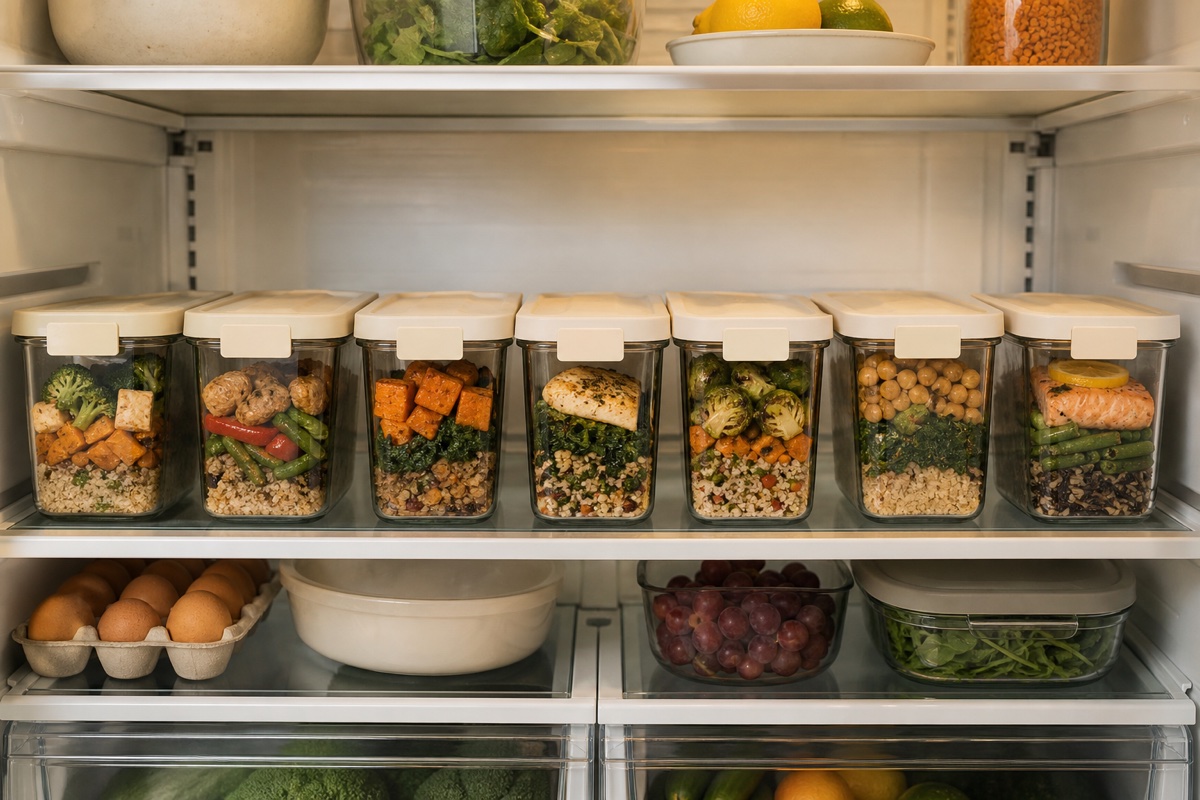
A Meal-Systems Approach to Weeknight Dinners
Why 'what's for dinner' should be a solved problem by Sunday night, not a daily question — and how to actually build that system.